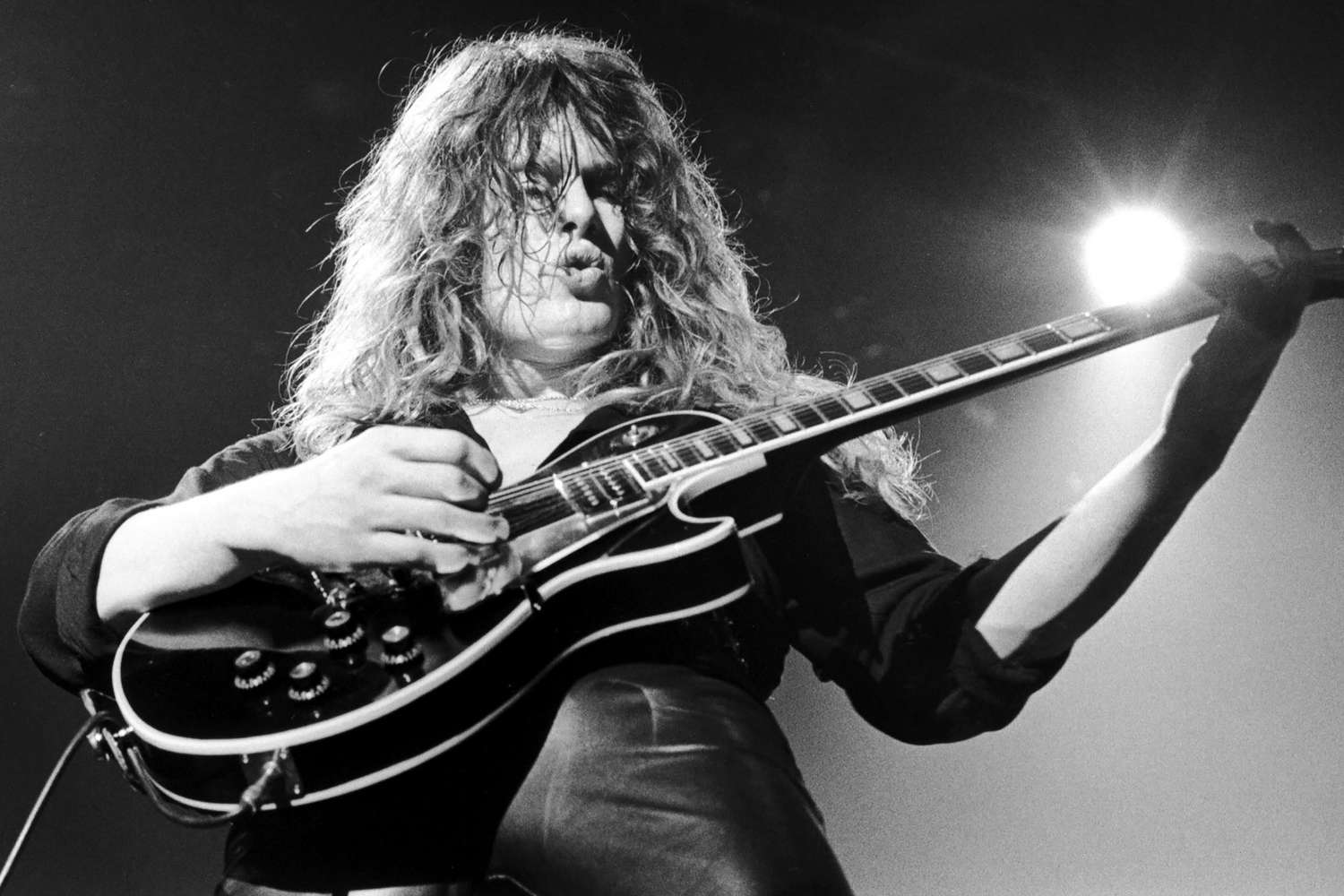
It has been nearly a year since the rock world lost one of its most electrifying and enigmatic figures. John Sykes, the guitarist who redefined the sound of 1980s hard rock, passed away on January 20, 2025, at the age of 65 after a courageous battle with cancer. His departure left a void that still resonates across the industry, but his legacy—etched in chrome and high-gain distortion—is permanent.
The Architect of Tone: From Reading to the World
John James Sykes was born on July 29, 1959, in Reading, Berkshire, England. Growing up, he was consumed by the blues-rock explosion of the time, citing icons like Jimmy Page, Ritchie Blackmore, and Gary Moore as his primary inspirations.
He didn't just learn to play the guitar; he mastered the art of "the attack." By the time he joined the New Wave of British Heavy Metal pioneers Tygers of Pan Tang in 1980, his style was already fully formed: a mix of blistering speed, melodic phrasing, and a wide, singing vibrato that could make a single note hang in the air for an eternity.
A Career of Titans
Sykes’ career was a succession of legendary stints, each of which left the band better than he found it:
- • Tygers of Pan Tang: He brought a raw, aggressive energy to albums like Spellbound and The Cage, proving he could shred with the best of the NWOBHM era.
- • Thin Lizzy: After the departure of Snowy White, Phil Lynott recruited Sykes for what would be the band’s final studio album, Thunder and Lightning (1983). Sykes rejuvenated the band, co-writing the heavy metal masterpiece "Cold Sweat" and providing the high-octane fire that Lynott needed for the band’s final chapter.
- • Whitesnake: Perhaps his most famous era, Sykes was the mastermind behind the multi-platinum 1987 self-titled album. He co-wrote hits like "Still of the Night" and "Is This Love," creating a sophisticated, heavy sound that conquered MTV and radio alike.
- • Blue Murder: When Sykes stepped out as a frontman, he shocked the world by revealing he was not just a virtuoso guitarist but a world-class singer. His vocals on the Blue Murder self-titled debut were soulful and powerful, matching the "wall of sound" production.
The Gear: The "Sykes" Les Paul and the Mesa Wall
One cannot talk about John Sykes without mentioning his iconic instrument. His primary guitar was a 1978 Gibson Les Paul Custom in Ebony, which became a piece of rock history. He customized it with:
- • Chrome Hardware: Swapping out the standard gold for a sleek, industrial look.
- • Mirror Pickguard: A signature visual element that reflected the stage lights during his solos.
- • Brass Nut: To enhance the sustain and brightness of his tone.
To achieve his "chainsaw-in-velvet" sound, Sykes was a pioneer of the Mesa/Boogie sound. He famously utilized the Mesa/Boogie Coliseum (Mark III) heads and the Tri-Axis preamp to get that thick, compressed saturation. In his later years, he also embraced the EVH 5150 III Stealth heads, pairing them with matched 4x12 cabinets to maintain his reputation as one of the loudest—and clearest—players on the stage.
Tributes from the Masters
Following his passing, the outpouring of respect from his peers highlighted the man behind the legend:
"Just heard the shocking news of John's passing. My sincere condolences to his family, friends & fans." — David Coverdale
"I loved him like a brother. John's playing, writing and singing were amazing. He was an amazing guitarist and together with Tony Franklin on bass we had a great rock trio. He will be missed." — Carmine Appice (Blue Murder)
"Absolutely shocked and saddened... working with him and spending as much time together as we did provided me with so many great memories." — Mike Portnoy
A Lasting Legacy
We miss John Sykes’ presence, his reclusive mystery, and that unmistakable "pinch harmonic" scream. For young guitarists just picking up their first instrument, his work is a masterclass in how to balance technique with emotion. Whether it’s the neo-classical fury of "Still of the Night" or the bluesy soul of "Jelly Roll," Sykes showed that the guitar is an extension of the soul.
He marched to the beat of his own drum and always pulled for the underdog. His music remains a guiding light for anyone who believes that rock and roll should be both sophisticated and dangerous.
The Riffs
Since it’s been nearly a year since John decided to trade his Mesa/Boogie stacks for a set of golden wings (though he probably complained about the acoustics in heaven), it’s only right that we give his discography the respect it deserves.
John wasn't just a "shredder." He was a guy who could play a solo so soulful it would make a statue weep, then immediately follow it up with a riff that sounded like a freight train hitting a wall of Marshall cabs. Here is the ultimate "Sykes-ology"—a guide for the uninitiated and the die-hard fans alike.
The "Essential" Sykes: The Riffs That Defined an Era
If you haven't heard these, stop what you’re doing, grab some high-quality headphones, and apologize to your ears for the delay.
- • "Still of the Night" (Whitesnake, 1987): The ultimate hard rock blueprint with that legendary breakdown and the most violent pinch harmonics ever recorded.
- • "Cold Sweat" (Thin Lizzy, 1983): John basically injected a shot of adrenaline into Lizzy’s veins with this riff, proving he was the true successor to Gary Moore.
- • "Valley of the Kings" (Blue Murder, 1989): An epic seven-minute masterclass in "The Wall of Sound" production and Sykes’ incredibly underrated, soulful singing voice.
- • "Crying in the Rain" (Whitesnake, 1987 version): Listen for the solo—it’s a terrifying display of technique, vibrato, and pure, unadulterated aggression.
- • "Jelly Roll" (Blue Murder, 1989): This shows off his softer side and his ability to write a bluesy, melodic hook that sticks in your brain for decades.
- • "Thunder and Lightning" (Thin Lizzy, 1983): This title track is pure speed and fire, showing exactly why Phil Lynott was so obsessed with John's playing.
- • "Billy" (Blue Murder, 1989): A high-octane rocker where his vocals and guitar are fighting for dominance in the best way possible.
The Secret Sauce: Why His Tone Is Better Than Yours
A lot of people think tone is in the fingers. For John, it was in the fingers and about five tons of high-gain German and American engineering.
- • The Mirror/Chrome Custom: That 1978 Les Paul Custom wasn't just for show; the brass nut and Grover tuners gave it the sustain of a nuclear reactor.
- • The "Dirty Fingers" Pickup: He used a high-output Gibson pickup in the bridge to make sure the front end of his amps was sufficiently punished.
- • Mesa/Boogie Coliseum: Most people use a Mark III; John used the "Coliseum" version, which had 180 watts of power—essentially a weapon of mass destruction.
- • EVH 5150 III Stealth: In his later years, he moved to the Stealth heads because apparently, the Mesa Boogies weren't "dark and angry" enough for him.
- • Lexicon Effects: He loved the PCM 41 and 70 for that lush, 80s chorus and delay that made his solos sound like they were recorded in an empty cathedral.
A Final Word for the Next Generation
If you’re a young guitar player wondering why everyone is still talking about a guy who wore leather pants and had better hair than your girlfriend, just listen to the music. John didn't hide behind a thousand pedals. He plugged a black Les Paul into a loud amp and played like his life depended on it.
He was a friend to the greats, a nightmare for sound engineers who wanted him to "turn it down," and a permanent icon for those of us who like our rock and roll with a little bit of danger. We miss you, John. The world is a lot quieter—and a lot less cool—without you.