THE HIGH PRIESTESS RETURNS: Why Coven at Alcatraz 2026 is a Literal History Lesson
Move over, Ghost. Sit down, Sabbath. The woman who actually started it all—and we mean all of it—is coming to Belgium. As Coven prepares to descend upon the Alcatraz Metal Festival 2026, it’s time to remind the world that before the "devil horns" were a corporate trademark, they were a family tradition for one Jinx Dawson.
While modern bands try really hard to look scary in their parents' basements, Coven was busy getting banned from the radio and investigated by the FBI before most of today’s headliners were even a twinkle in a roadie's eye.
A Pedigree of Secrets: Jinx's "Addams Family" Upbringing
If you think Jinx Dawson just "picked up" the occult to sell records, you clearly haven't checked her family tree. Born in Indianapolis on a Friday the 13th, Esther Jinx Dawson didn't exactly have a "white picket fence" childhood.
- Her lineage traces back to the Mayflower, which is about as American-aristocracy as it gets.
- Her father was a 33rd-degree Scottish Rite Mason, and her grandfather was a High Priest of the Royal Arch Masons.
- She was raised by a Creole nanny who introduced her to the worlds of Hoodoo and Obeah.
- Her "faith" wasn't Sunday school; it was the Left Hand Path, taught as a scholarly and ancestral discipline.
- Contrary to the "flower power" clichés of the era, her parents weren't hippie-dippie; they were high-society intellectuals with a deep, private knowledge of ancient mysteries.
- She was an opera prodigy who received a scholarship for her voice, blending high-society etiquette with forbidden rituals.
The 1969 Coincidence (Or Was It?)
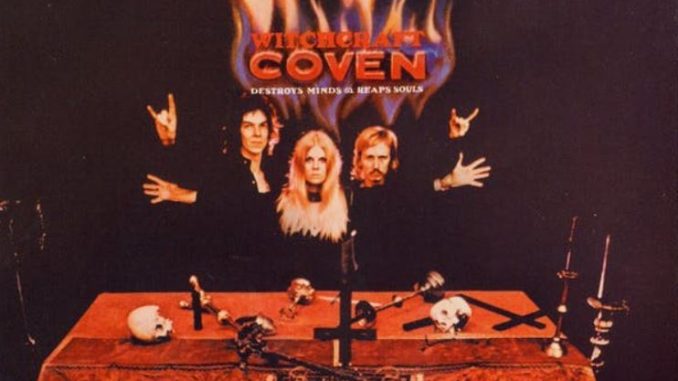
In 1969, Coven released Witchcraft Destroys Minds & Reaps Souls. It was the first time "Hail Satan" appeared on a rock record, but that’s not even the weirdest part.
- The Name Game: The first track on their 1969 debut was titled—wait for it—"Black Sabbath."
- The Bassist: Their bass player was credited as Oz Osborne (actually Greg "Oz" Osborne), predating the other Ozzy by a full year.
- The Horns: The gatefold artwork featured the first documented use of the "Sign of the Horns" (Mano Cornuta) in rock history.
- The Ritual: The album ended with a 13-minute "Satanic Mass," which was essentially a recording of a ritual, not just a catchy hook.
Banned, Burned, and Blamed
Just as Coven was hitting their stride, the Manson Family murders happened. Because the media in 1969 was just as dramatic as it is today, they found a photo of Charles Manson holding a Coven album. Mercury Records panicked, pulled the album from shelves, and Coven became the ultimate "forbidden" band.
While other bands of the era were tripping through the "Summer of Love," Jinx maintained a strict, almost martial discipline. Unlike the drug-fueled tropes of the 60s, Jinx’s career was defined by her opera training and her role as a high-society "Goth Queen" long before the term existed. She has been vocal about the fact that she didn't need drugs to access the "other side"—the rituals were enough.
Life Outside the Coffin
When Coven went on hiatus, Jinx didn't just vanish into a cloud of sulfur. She kept busy in ways that would make a Renaissance woman weep:
- Film & Music: She had a minor role in the cult-classic movie Cool World and worked as a backup singer in Hollywood.
- The "Billy Jack" Surprise: She recorded the hit "One Tin Soldier" for the film Billy Jack. It became a massive pop success, proving she could dominate the charts as easily as the underworld.
- Family Duty: She spent years as a dedicated caregiver for her terminally ill father, showing that even High Priestesses have heart.
- Current Status: Jinx currently resides in a home filled with antiques and occult artifacts (as one does), maintaining her status as the reigning matriarch of the genre.
Alcatraz 2026: The Final Ritual?
Coven’s current status is anything but "retired." After a triumphant return at Roadburn and a "Satanic Panic" tour with the band Lucifer, Jinx is bringing the full theatrical ritual to Alcatraz 2026. Living in a world where she is finally recognized as the Mother of Metal, Jinx is more popular now than she was in the 70s.
Expect the coffin. Expect the horns. And expect a voice that still hits notes that would make a banshee jealous. If you’re at Alcatraz, you’re not just seeing a show—you’re witnessing the source code of heavy metal.
"The audiences now know the words to every song... they expect certain things, and that’s kind of nice, because it’s become easier than the days when people thought we were going to kill them."
— Jinx DawsonFuture Plans
Jinx has hinted at new "musical" recordings and a potential memoir that would finally set the record straight on the 1960s occult explosion. For now, her focus is on the stage, ensuring that the fire she lit in 1969 never goes out.